Showcases

All tags

KIRI Engine stress-tests its 3DGS to Mesh mode on a single white sheet of paper

XShowcasesCode & Tools

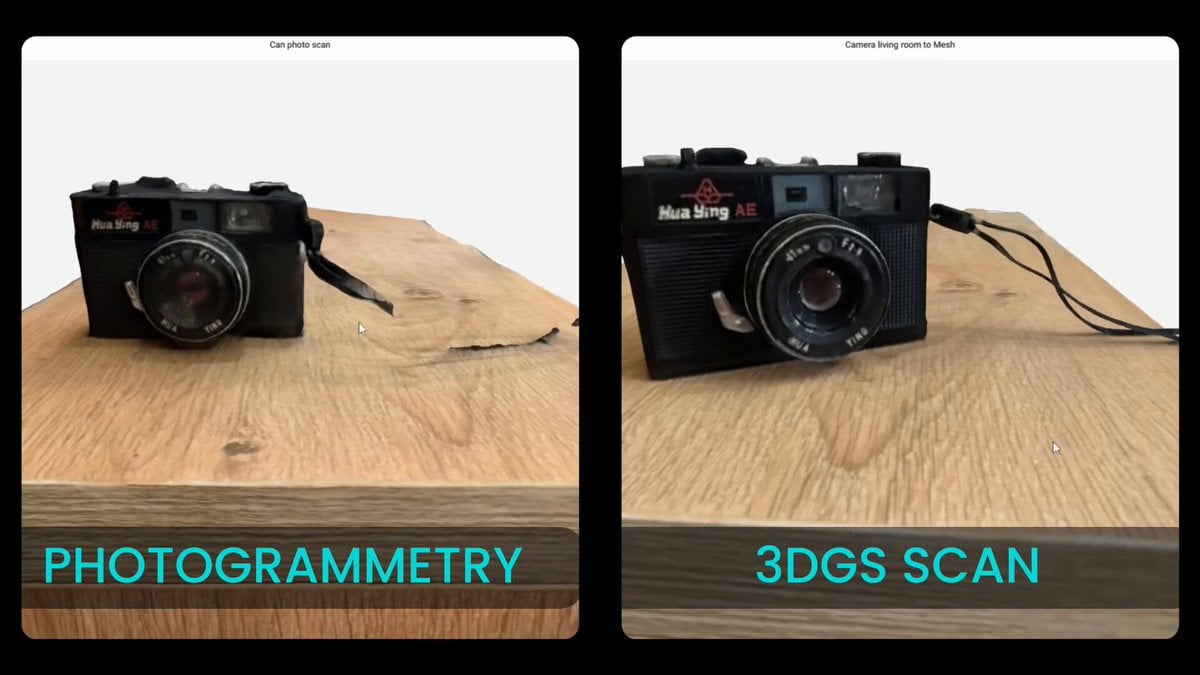
KIRI Engine posted a comparison on X that pits its 3DGS to Mesh mode against traditional photogrammetry on deliberately hard subjects, including what it calls an impossible task: scanning a single white piece of paper. With no features to track and almost no thickness, the team says traditional photogrammetry “just falls apart” on such a subject, and the clip sets the two methods side by side.

KIRI calls it a pure stress test rather than a typical use case, but says “the difference is undeniable” for thin or featureless surfaces. The 28 second clip drew 42 likes and 11 bookmarks within a day.

David Finsterwalder turns Gaussian splat scans into sim-ready scenes for Isaac Sim and MuJoCo

XShowcases

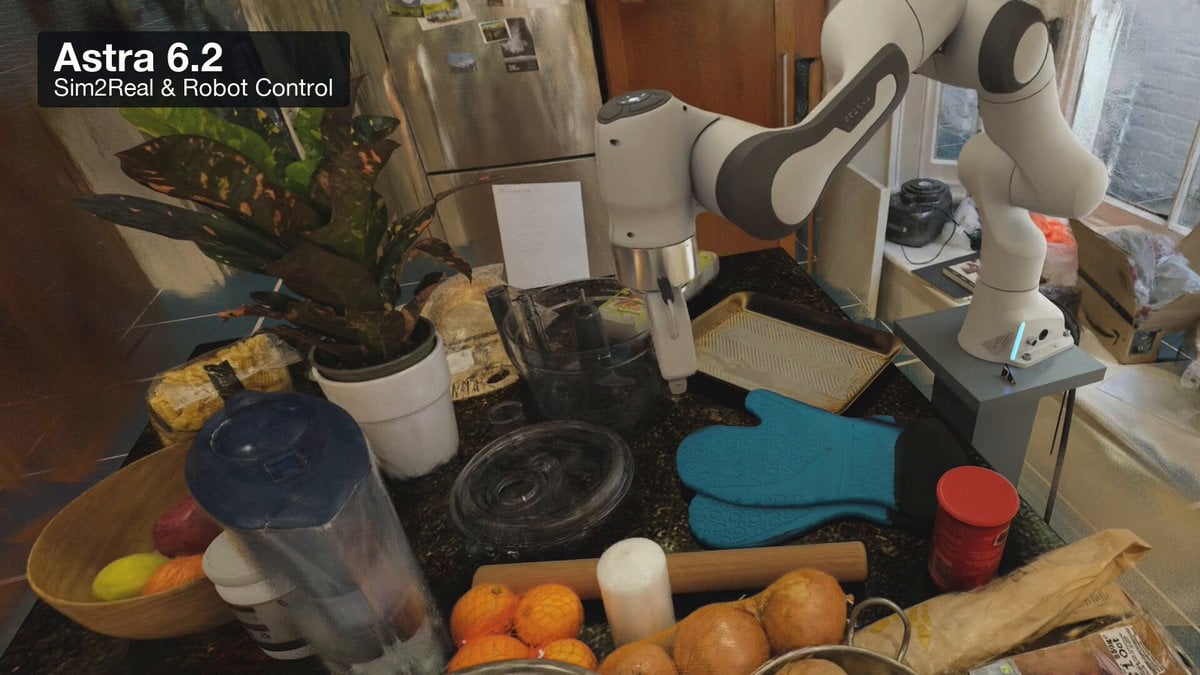
David Finsterwalder shared on X a pipeline he is building that goes from a full environment scan captured as a Gaussian splat to a simulation-ready environment for NVIDIA Isaac Sim or Google DeepMind’s MuJoCo. He uses OpenAI’s GPT Astra models for the 3D modelling step and says moving from Astra 6 to 6.2 brought a clear improvement in 3D modelling and robot control.

Letting the model drive the robot directly also works, he writes, although it is slow because it pauses while thinking; he plans to use the recorded movements to fine-tune open-weight robot models such as pi 0.5, MolmoAct or the upcoming Gr00t 2. The pipeline is meant for workshops and for testing client use cases in simulation before larger investments in robot hardware. The post drew 52 likes and 49 bookmarks.

Dany Bittel's macro splat of a shimmering blue Morpho butterfly

XShowcases

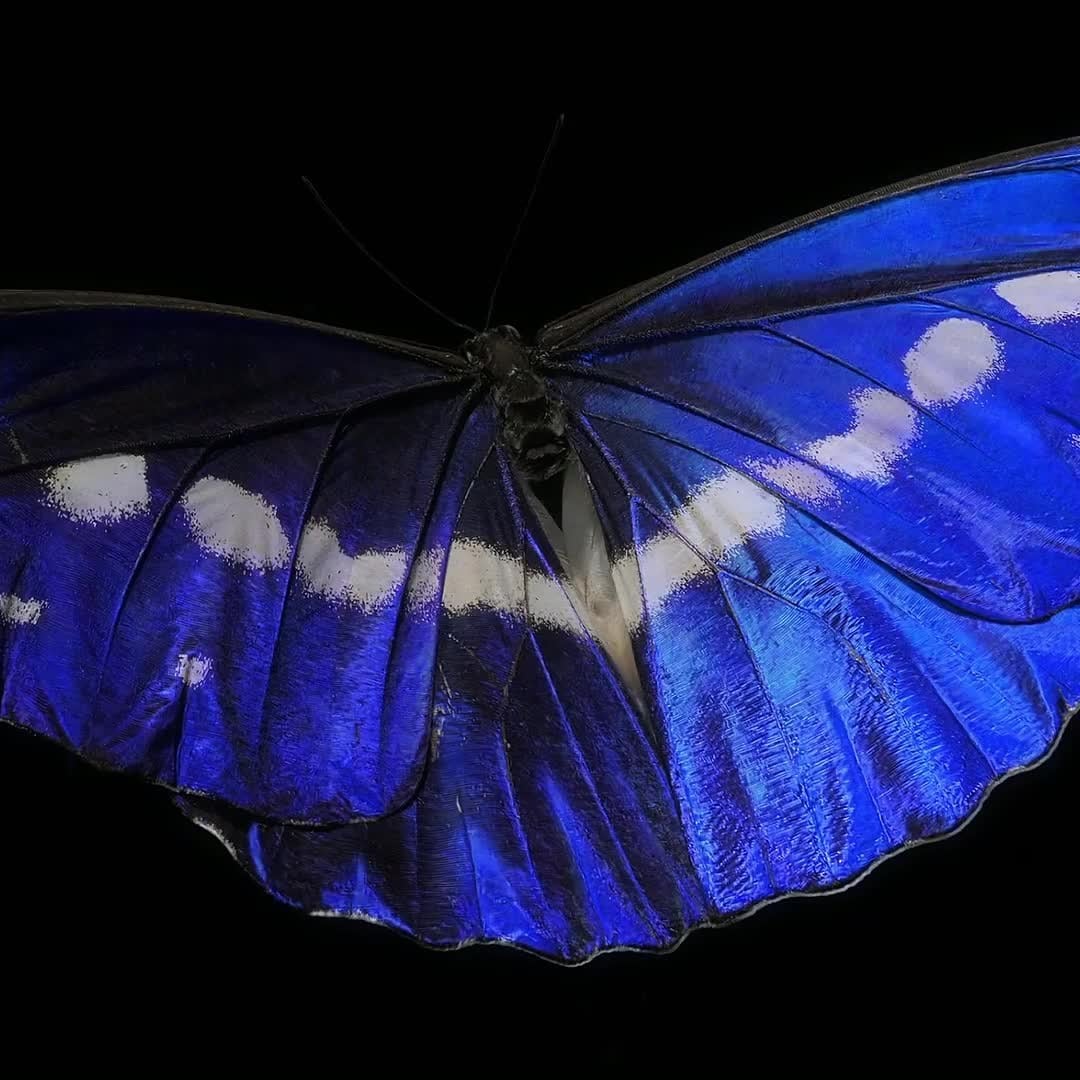
Macro splat artist and VFX supervisor Dany Bittel posted on X a Gaussian splat of a Morpho rhetenor helena butterfly. In the 24-second video the blue of the wings shimmers as the view moves around them, a colour that comes not from pigment but from microscopic structures that reflect only blue light.

That kind of angle-dependent shimmer is exactly what the view-dependent colour of a splat can reproduce and a textured mesh cannot. The post was one of the most shared splat posts of the day, with close to 500 likes, about 50 reposts and more than 120 bookmarks within a day.

UnrealTwin runs a foggy Unreal Engine scene as Gaussian splats in phone browsers

LinkedInShowcasesCode & Tools

Ans Shabbir shared on LinkedIn a dense, photogrammetry-based Unreal Engine 5 environment by Scans Factory that runs live in a web browser, even on a smartphone. The post stresses that there is no multi-gigabyte download and no Pixel Streaming: dense fog, overcast lighting and heavy geometry are rendered locally via WebGPU with the original Unreal art direction intact, with ambient sound built into the browser runtime.

The scene is hosted on UnrealTwin, a service that turns Unreal Engine scenes into shareable web links using its Gaussian splatting based SplatForge technology and promises unlimited bandwidth instead of per-viewer streaming costs. The post drew more than 270 reactions and 44 comments within a day.

Spotnik Technologies shows its browser-based national digital twin of the UAE

LinkedInShowcasesIndustry

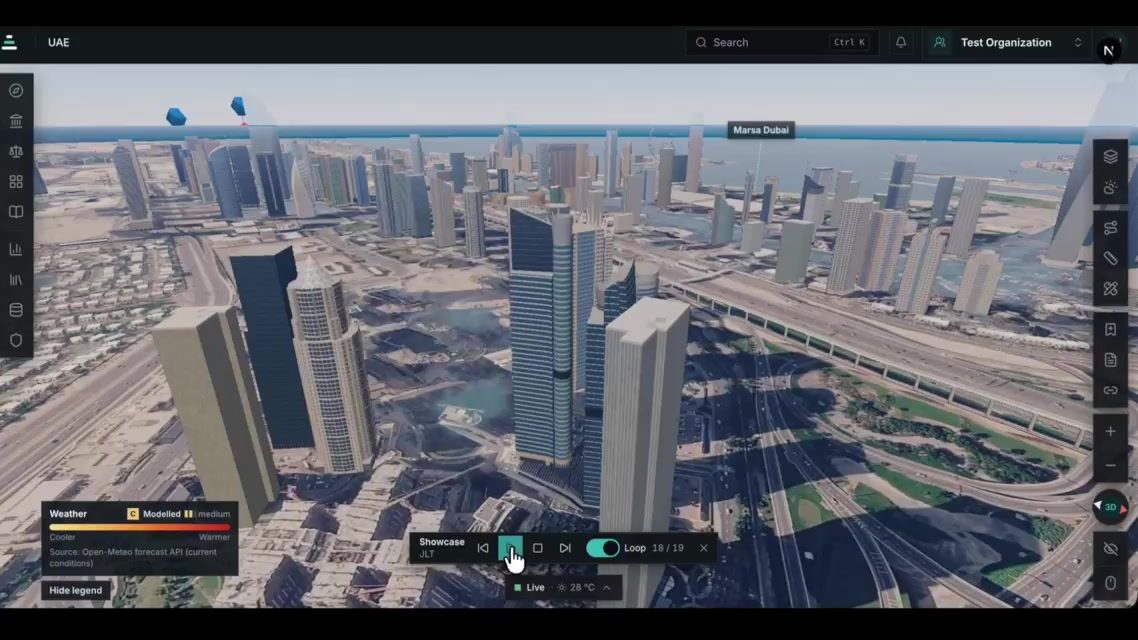
UAE-based Spotnik Technologies marked GIS Day on 19 November with a LinkedIn post saying its team is building a national digital twin of the UAE: “one shared 3D view of the country’s infrastructure, with the data that matters placed directly on it.” The company argues that national decisions on infrastructure, housing, mobility and sustainability depend on location data that usually sits in disconnected systems and reaches decision-makers as static reports.

According to the post, traffic, air quality, sensor readings and community indicators appear on the same view, so leadership, planners and technical teams work from the same facts. The twin runs in a web browser with no specialist software to install, every figure shows its source, and customers keep control of their own data. The attached three-minute video, described as “a short look at where we are today”, flies across the emirates, from Fujairah to Dubai Marina, with layers for weather, construction sites, intercity bus routes, public transport stops, hospitals, neighbourhood liveability scores and a landmarks list that includes power plants. The post does not mention Gaussian splatting or say how the 3D city models were captured.

HKUST lets visitors hear shopkeepers' stories inside 3D scans of Kowloon City shops

XShowcases

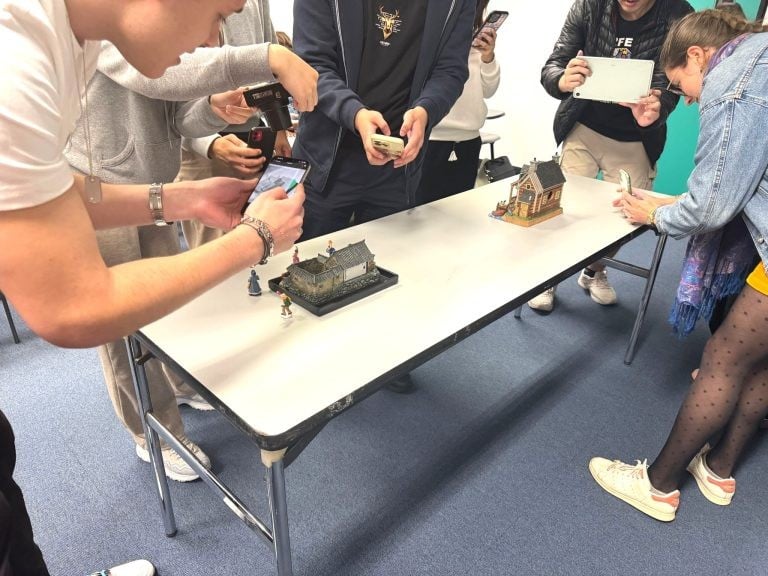
KIRI Engine highlighted on X how HKUST’s Digital Humanities Initiative uses its 3D scans to preserve old shops on Nga Tsin Wai Road in Kowloon City, which the Urban Renewal Authority plans to demolish within the next decade. In the VR recreations of Yuen Mao Hing Kee Tea Shop and Kam Shing Dried Seafood Shop, picking up an object plays a recording from the shop owner’s interview with subtitles.

Students captured the shops’ objects with photogrammetry in KIRI Engine Pro, which also offers a 3DGS mode, and published tutorials on scanning, cleaning models in Blender and building the scenes in Unreal Engine 5. A partner on the related Digital Kowloon archive used Gaussian splatting to capture a shop interior.

Cornell's Pentimento uses Gaussian splats to document reclaimed timber builds

BlogPapersShowcases

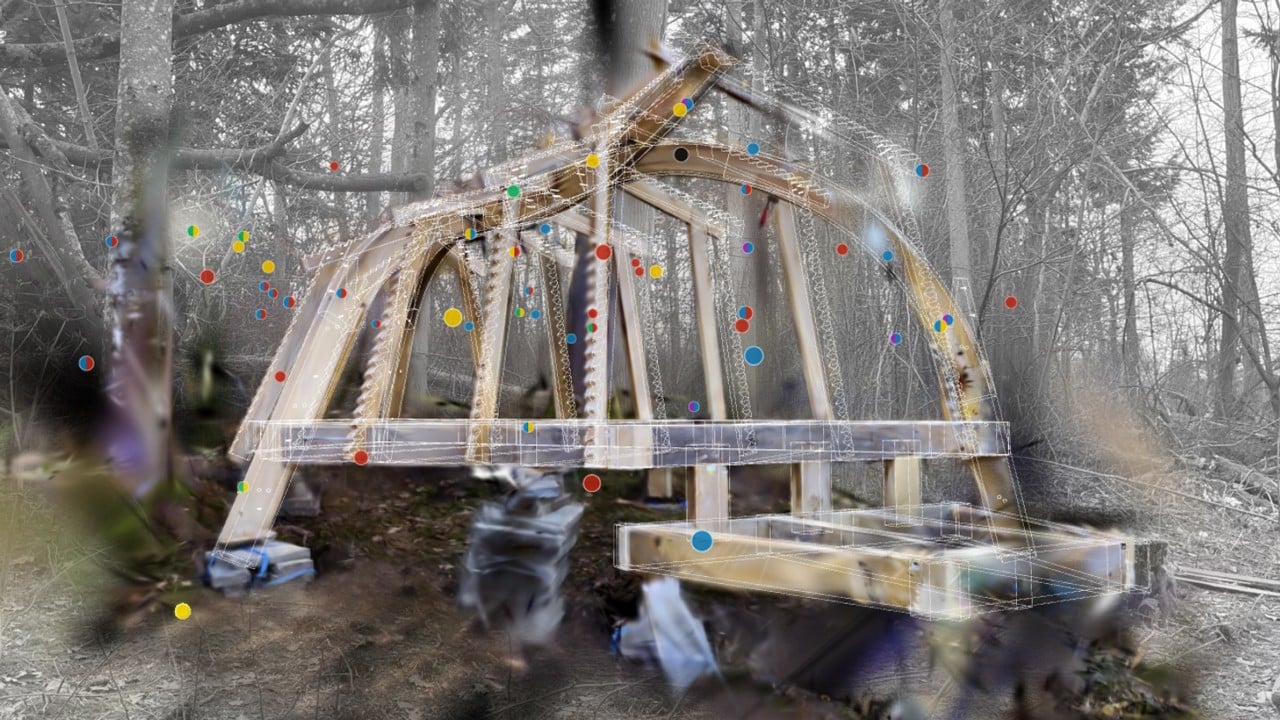
Researchers from Cornell Tech and the Royal Danish Academy’s CITA won the Best Paper Award at ACADIA’26 for Building Drift, which presents Pentimento, a tool that documents how a building made from reclaimed materials drifts away from its design. Builders record video and narration on a phone or smart glasses, and Pentimento estimates camera poses with COLMAP, trains a Gaussian splat and overlays it on the original 3D model, so every stakeholder can see where and why the build changed, as the Cornell Chronicle reports.

The team tested it on ReShelter, a reclaimed timber pavilion in a forest near Hvalsø, Denmark. According to Radiance Fields, ArUco markers register the splat to a glTF export of the CAD model, Whisper transcribes the narration, an AI model sorts each change into five drift categories, and the browser view renders splat and model together with three.js and Spark. The paper does not link to code.

Pixel-art Gaussian splats are catching on, and KIRI Engine is watching

XShowcases

Pixel-art worlds built from Gaussian splats are spreading on X. The most shared example this week is a post by @gamemangaanime (16 November 2026): a floating pixel-art diorama with a red barn, trees and a small farm, made with Fable 5.2 on its high setting with no 3D models and no assets, everything in code. The Japanese post calls pixel art plus Gaussian splats something that is just starting to catch on. It had about 800 likes, 65 reposts and 36,000 views when we picked it up.

The creator is frank about the limits: it runs nicely, but turning it into a real game looks hard, because no game engine supports the approach yet and assets probably cannot be reused. The post ends by asking whether this has a future.

KIRI Engine picked up the trend on 17 November with a compilation video, writing that its feed this week has been “full of pixel-art splats and point-cloud experiments” that give a chunky retro look to a world you can fully move around in. The company says it is curious where people take this for games and animation, and how its own scans might look with the same treatment, and added in a reply that it loves stylised and non-photorealistic looks as much as realism.

Paolo Tosolini invents a new way to slide through waypoints in a virtual tour

LinkedInCode & ToolsShowcases

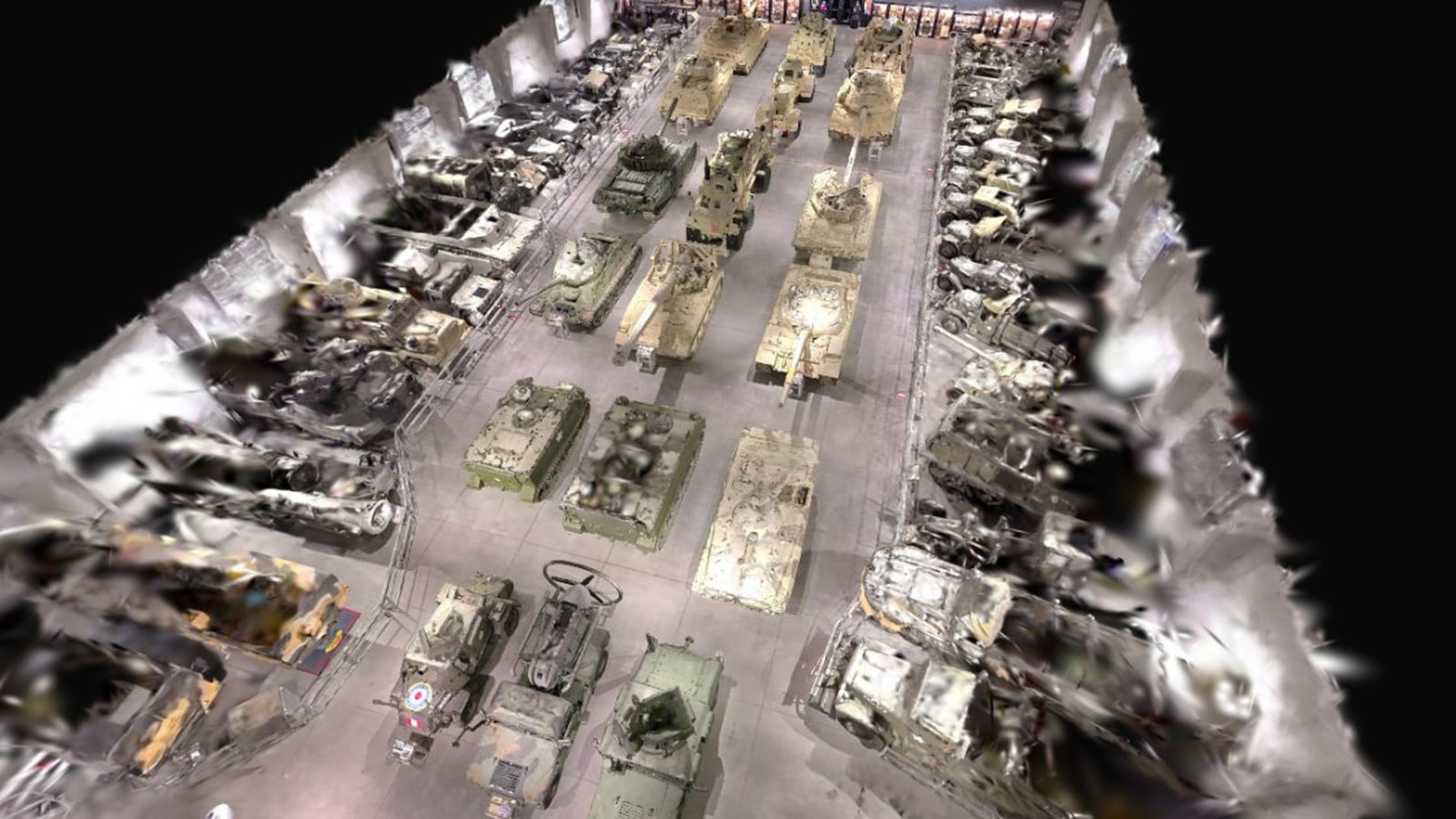
Paolo Tosolini invents a new way to slide through the waypoints in a virtual tour. Super easy. Super convenient! In a LinkedIn post, he shares a prototype that adds a UI layer to a 3D Gaussian Splatting model of the Tucson Military Vehicle Museum. He scanned the hall with an XGRIDS PortalCam during a road trip in Arizona.

A column of cards on the right of the viewer is the tour’s waypoint list. You slide or scroll through those cards to fly from vehicle to vehicle, and you can still drag to look around, zoom, or walk the hall on foot. The prototype works on mobile and desktop. It was built in Claude Code on top of the PlayCanvas SuperSplat open-source code. The tour is at paolotosolini.github.io/tucson-military-vehicles.

XGRIDS names the Season One winners of the World Backup Project

LinkedInShowcasesIndustry

XGRIDS has announced the Season One winners of its World Backup Project, a call for 3D Gaussian Splatting creators to capture a piece of reality and take it further. The official campaign page says entries opened on 31 August 2026 and closed on 31 October, with winners due on 7 November and a featured showcase on 14 November. An entry had to include at least one XGRIDS tool in the workflow, such as the LCC Scan phone app, PortalCam or Lixel hardware, LCC software, or an SDK or plugin. It did not have to use only XGRIDS tools.

The grand prize is a PortalCam and automatic entry into the XGRIDS Signed Creator Program. It goes to Josette Seitz, for Burning Man and the Colosseum; Split View Studio, for the Monastery of Santa María de la Valldigna; and Studio Duckbill, for interactive 3D experiences across three waterways in Japan.

Second prize, a one-year LCC Studio Premium license, goes to Christoph Schindelar, Stephen Ryan, Billy Wong, Eli Jensen and Gabriele Romagnoli. Third prize, a six-month license, goes to Lukasz Mirocha, Aurélien Camart, Olivier Kerremans, LotXR and Josua Hönger. Fourth prize, a three-month license, goes to Paolo Tosolini, Desierto Florido, arlData, Alan Creek and Manuel Allinger. Fifth prize, a one-year LCC Cloud license, goes to Cutter Shea, Alex Vizitiu and Nicolas Brice.

The names and project titles above follow the XGRIDS LinkedIn announcement. Prize details follow the official campaign page.


A Fable 5.2 workflow turns a church scan into a photoreal Blender film

LinkedInShowcases

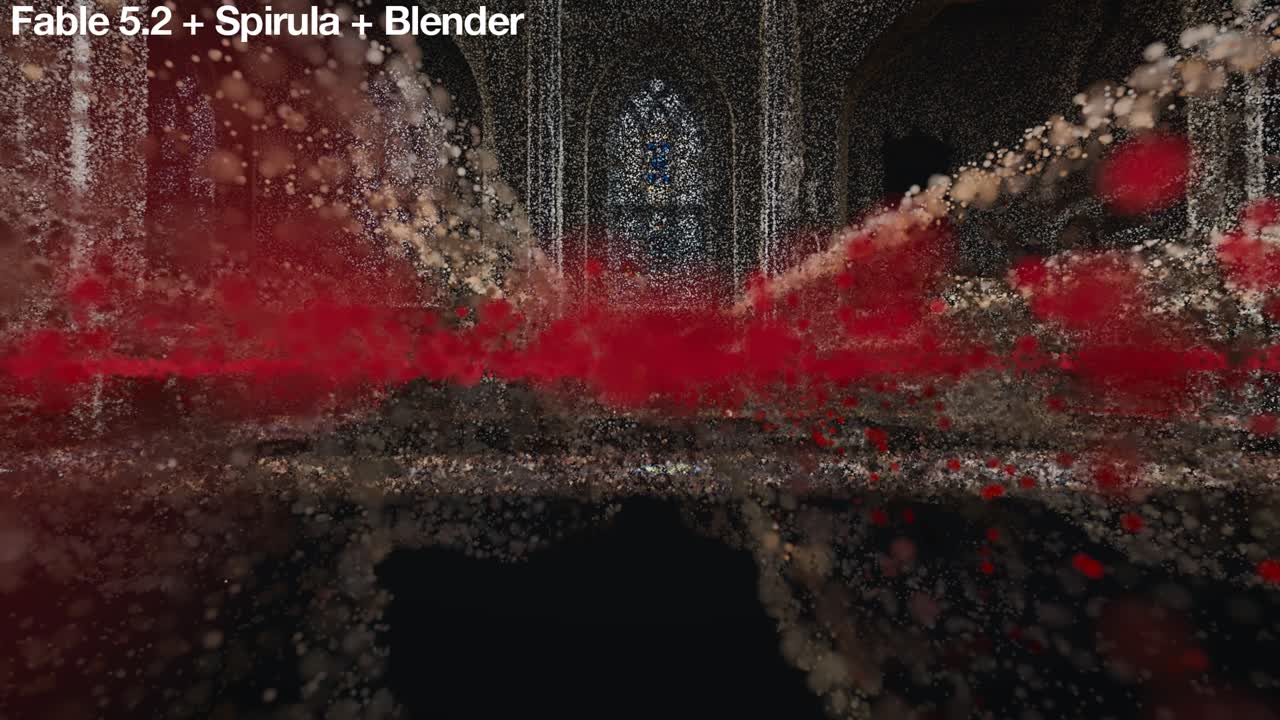
In a 12 November 2026 LinkedIn Pulse article, Chiang Ning describes a workflow, run with Claude Code, Fable 5.2 and Blender on a Mac, that uses a 3D scan as a survey to rebuild a church interior as clean Blender geometry and render a 30-second 16:9 photoreal film of a bee flying through it. The scan is St Bartholomew-the-Less Interior, published by artfletch on Sketchfab and Fab from Sony a6000 photographs taken in 2021 and processed in Agisoft Metashape. Ning writes that the study is independent and is not affiliated with the hospital, the church or the scan’s author.

The film opens on the scan as a 3D Gaussian Splatting-style cloud and then blends in 3D into the photoreal render. Ning is explicit that this opening cloud is not a trained Gaussian splat: Fable scattered soft glowing points over the scan mesh, coloured from the scan’s photographs. The next step he describes would be a real splat trained in Spirula (free, GPL-3.0), so the chain becomes iPhone video to splat to Blender model to film; the Fable prompt, he says, already accepts a photogrammetry mesh or a Gaussian splat. Scale was taken from Victorian 7-inch floor tiles, giving 2.03 metres per scan unit and a nave about 9.6 metres square. The bee is a CC BY model by ayann437 on Sketchfab, with its wings sped to about 230 beats per second. The final render was 720 frames at 96 samples, about 10 hours, then upscaled to 4K.

A hybrid 3DGS capture of Kyoto’s Gion Matsuri floats is published on SuperSplat

XShowcases

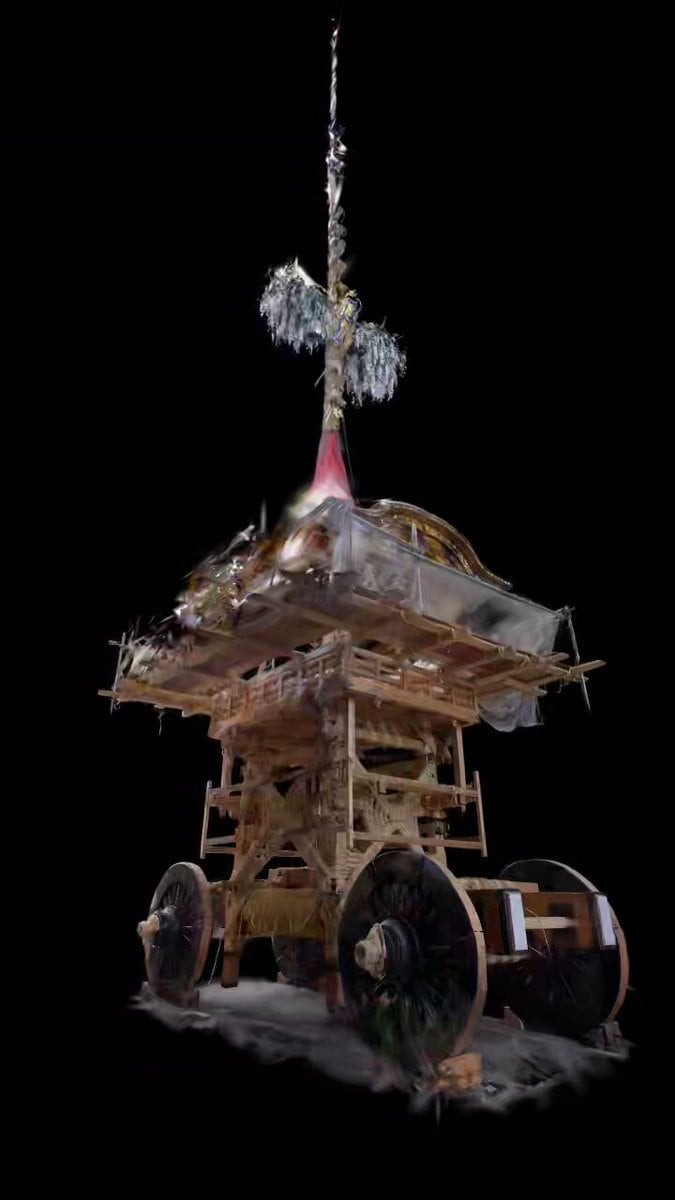
On 10 November, Sagar Patel (@_sgrptl) posted a hybrid 3D Gaussian Splatting reconstruction of Gion Matsuri in Kyoto, processed with Sony XYN and viewable online in PlayCanvas SuperSplat. The post links a SuperSplat scene of the Kikusui-hoko float captured on 11 July 2026 and a project write-up on dokodemo.xyz.

Patel writes that the results were decent considering difficult filming conditions. The SuperSplat scene title in the post preview is “Kikusui-hoko [ 菊水鉾 ] | July 11 2026 | Kyoto.”

A 360° exhibit reconstructs the 1984 Macintosh with oriented Gaussian splats

GitHubShowcases

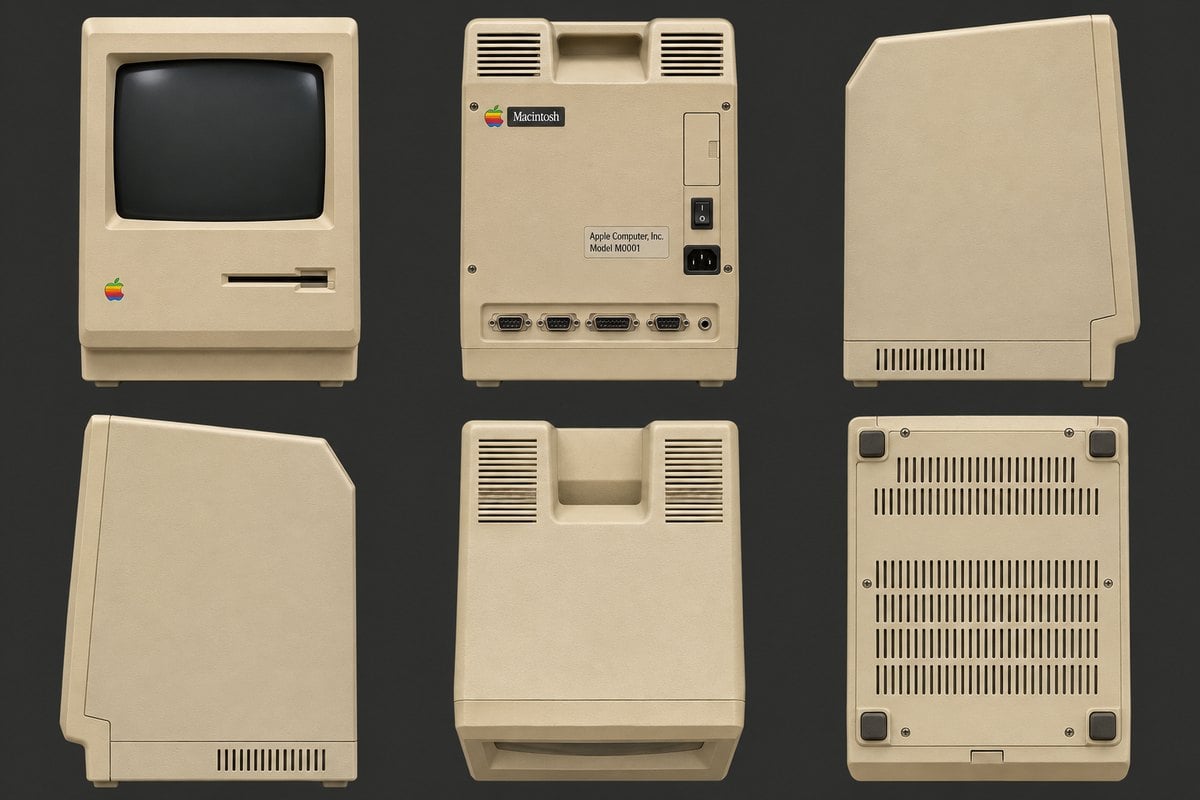
dodola/macintosh-128k-360 was created on 9 November 2026. The README describes an interactive reconstruction of the original 1984 Macintosh, with orbiting, four preset views and a closer look at the rear connector panel, and a Simplified Chinese interface.

The case uses oriented Gaussian splats colored by GPT Image–generated textures; the rear layout follows the early M0001, and the finish and label artwork are described as reconstructions. A committed static build lives in dist/, and the README documents a workflow for regenerating the calibrated face textures and rendering splat grids in a WebGL2 shader.

Seen from twelve sides is a from-scratch NumPy 3DGS fit shown in the browser

GitHubCode & ToolsShowcases

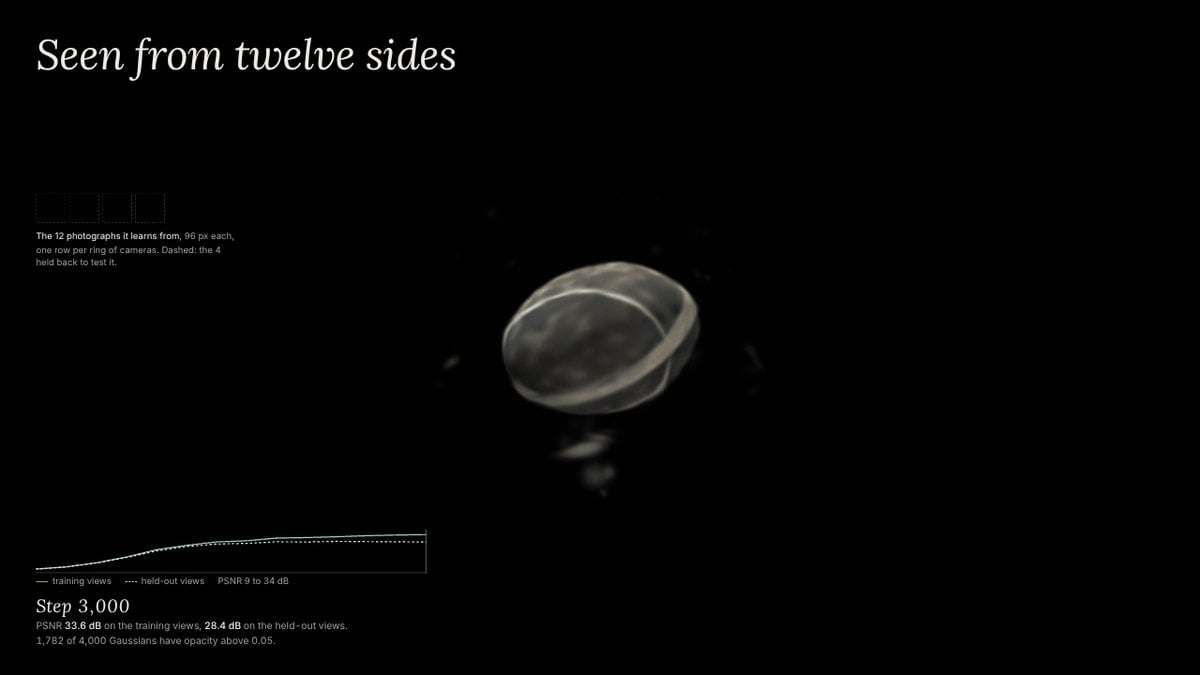
joezgao/seen-from-twelve-sides was created on 9 November 2026. The README describes a 3D Gaussian Splatting fit written from scratch in NumPy and displayed in the browser: twelve rendered photographs of a procedural stone go in, and a cloud of 4,000 Gaussians comes out.

The page lets a viewer scrub through training, show the training cameras, and hold H to compare a held-out camera’s photograph with the Gaussians rendered from the same pose. A live demo is linked at joezgao.github.io, with no install required beyond a recent browser.

rangle is a free-viewpoint sports replay app built on Gaussian splat reconstructions

GitHubCode & ToolsShowcases

Hosi121/rangle was created on 6 November 2026. The README, written in Japanese, describes a Flutter web app for finding sports highlights in a vertical feed and scrubbing both time and viewpoint, with calibrated multi-view footage reconstructed in the cloud as 3D or 4D Gaussian Splatting and decoded on the device.

The project already lists viewing, generation, social features and a LIVE path that trains models as multi-view recordings arrive, with eight models published from a Tokyo T4 instance, while noting that a sustained 30-second live delay, real camera input, phone performance, large-scale viewing and Gaussian ABR switching are still unproven. Original code is MIT licensed.

3DGS Weather adds rain, snow and puddles to splat scenes in the browser

BlogCode & ToolsShowcases

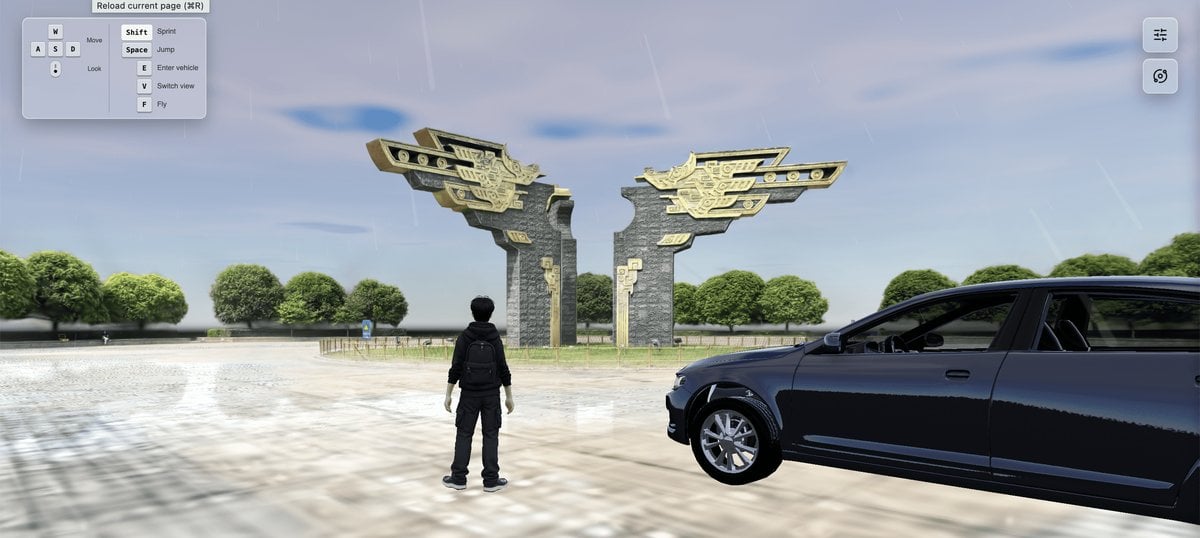
A developer known as hh-hang has published 3DGS Weather, an open-source browser project that adds rain, snow, lightning and puddle reflections to a Gaussian splat scene. The project loads the environment as a SOG splat and pairs it with a hidden glTF collision mesh for collision detection and depth occlusion, so a walking character and a drivable vehicle can move against the mesh and precipitation can sit correctly in front of and behind the splats.

A Spark shader modifier blends ambient light, a sun that tracks the time of day, vehicle headlights and up to four flood lights into the splat colors, with depth maps from the collision mesh blocking those beams. The TypeScript project runs on three.js r186 and Spark, is licensed under GPL-3.0, and has a live browser demo on GitHub.

Clemson turns existing Memorial Stadium drone photos into a Gaussian splat

BlogShowcasesIndustry

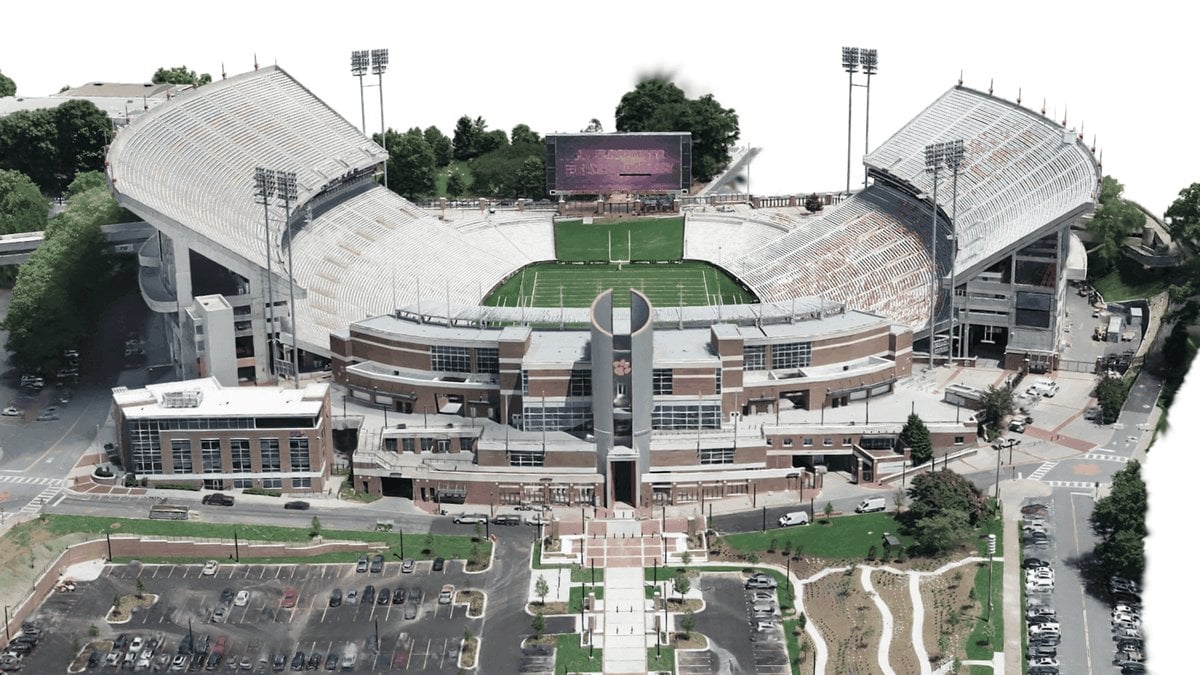
Clemson University’s Center for Geospatial Technologies reprocessed existing drone imagery of Memorial Stadium into a Gaussian splat and a mesh in Esri ArcGIS Drone2Map, with no new flights. Drone2Map added a Gaussian splat product in version 2025.2, generated as a 3D tile layer using deep learning, and Jared Gingrich ran the stadium imagery through the 3D Products template, which outputs point clouds, textured meshes and Gaussian splat layers from the same camera alignment; the stadium mesh and splat processed together in about 13 hours.

Esri does not state the hardware behind that run, the splat count, or the drone used for the original capture. According to Esri, the splat covers the stadium and surroundings as a single segment and loads much faster than a campus mesh that had to be split into 10 segments, resolving light poles, flagpoles, upper-tier spires, goalposts and tree branches that the mesh rendered poorly. The project is also detailed in Esri’s ArcWatch case study.