

NVIDIA ovrtx 0.7.0 adds diffuse relighting for Gaussian splats
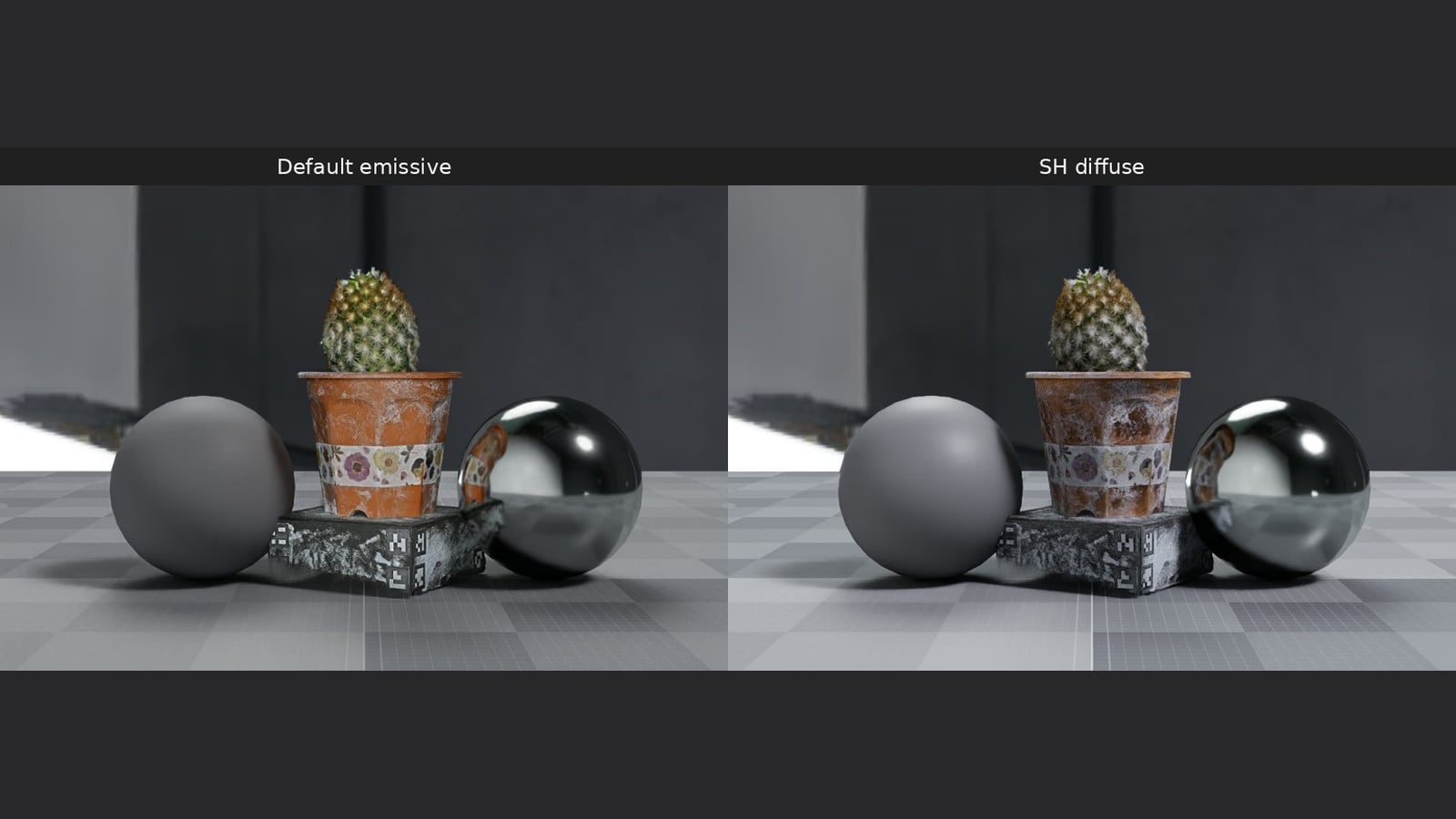
NVIDIA has shipped ovrtx 0.7.0, a pre-release of its Omniverse RTX rendering library, with a new way to relight ParticleField Gaussian splats. The 14 November 2026 release includes ParticleFieldSHDiffuse.mdl, which is bound to a ParticleField prim so scene lights can illuminate the splats in Path Tracing and Real-Time Path Tracing. Diffuse albedo is taken from the splat’s SH0 coefficient. The material has no emission, and captured illumination stays baked into SH0. The official Gaussian splats example compares the default emissive look with the SH diffuse material.
The same release adds experimental WPM lidar rendering for NuRec-trained Gaussian splats that expose lidarExtraSignals. Ordinary RGB splats do not produce a lidar response. Splat-related fixes include sorting Gaussians by true camera distance rather than a projection onto the ray, and blocking invalid Gaussian positions from spreading NaN or Inf values into the acceleration structure.
ovrtx 0.7.0 remains a pre-release. Packages and Python wheels are on the GitHub releases page. The comparison image in this article is from the official example, which uses a cactus ParticleField captured by Steam Studio and released under CC0-1.0.