

H-2DGS reconstructs a sharp, deformable cortical surface for neurosurgical navigation
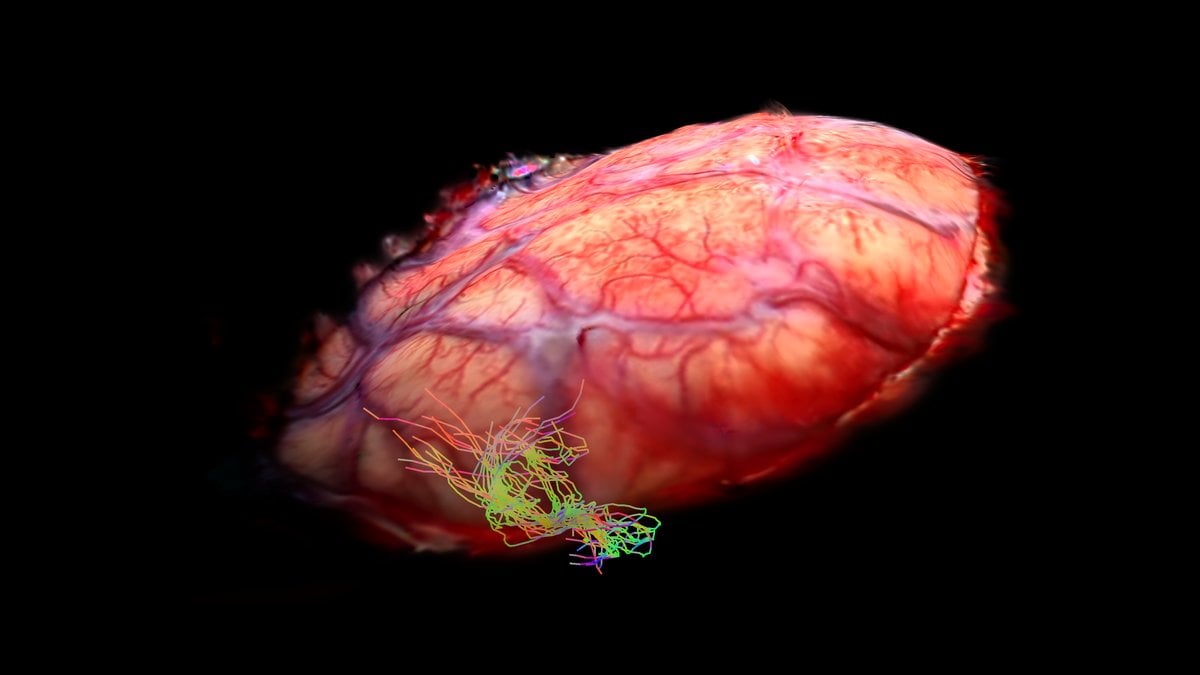
Zhang Zichuan, Bart Brouwers, Rembrandt Bakker, Maud Landers, Geert-Jan Rutten and Maxime Chamberland present height-field 2D Gaussian Splatting (H-2DGS) for reconstructing the exposed cortex during tumor surgery so it can be visualized with whole-brain MRI and tractography. Under limited surgical view coverage, conventional 3DGS can distribute opacity through a thick, geometrically ambiguous band; H-2DGS concentrates a robust 3DGS reconstruction, fuses its depth into a shared TSDF surface, and represents that surface with curved, surface-oriented Gaussian primitives.
The explicit surface also supports postoperative alignment, in which MRI-derived depth deforms the reconstruction. Across five real neurosurgical cases, H-2DGS gives low multi-view depth inconsistency, a compact 7.97 MB representation, and interactive rendering at 29–42 ms per frame.