

CVTSplat reconstructs surfaces with adaptive centroidal Voronoi cells, in about 2.5 minutes
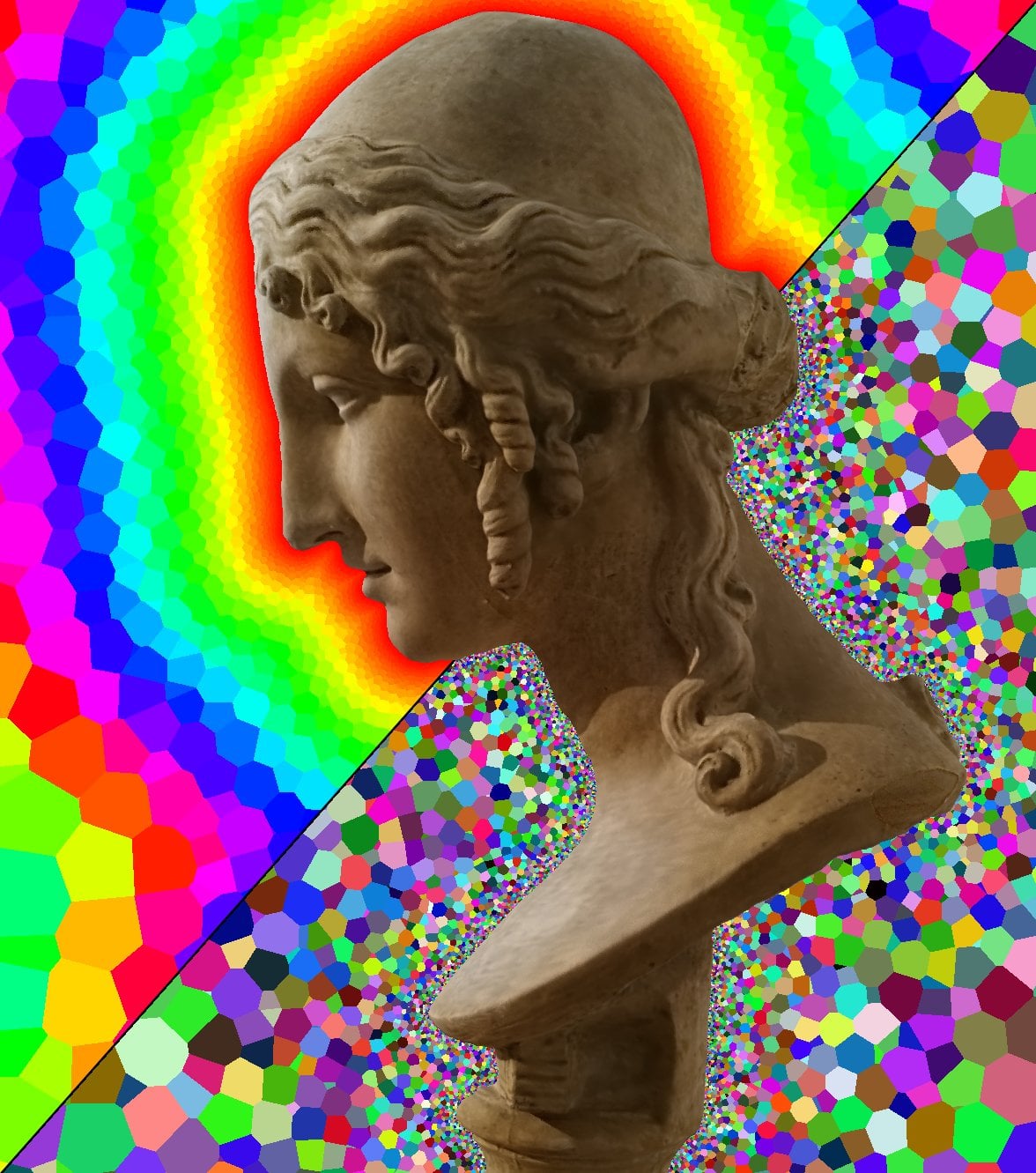
Briac Toussaint, Diego Thomas, Jean-Sébastien Franco, Edmond Boyer and Christian Theobalt present CVTSplat, which uses adaptive centroidal Voronoi tessellations for multi-view shape and appearance reconstruction. Cell size is modulated by the evolving signed distance field, concentrating sites near the zero level set while keeping cells nearly centroidal, and the pipeline is specialized with GPU nearest-neighbor queries, approximate Voronoi construction and a rasterizer tailored to small, nearly isotropic cells.
The authors report that their Voronoi construction is 5 to 10 times faster than general-purpose alternatives in this regime. On DTU and BlendedMVS, CVTSplat reaches geometric accuracy competitive with the best Gaussian-splatting surface methods while training in about 2.5 minutes on a single GPU.