

3Dflow's 3DF Zephyr 9.0 folds Gaussian Splatting into its photogrammetry pipeline
3Dflow, the Verona software house behind 3DF Zephyr, added a Gaussian Splatting workflow in Zephyr 9.0, released on 14 July 2026. The feature is also available in 3DF Zephyr Lite. 3Dflow is a privately held computer-vision company, established in 2011 as a spin-off of the University of Verona and in 2012 of the University of Udine, with offices in Verona.
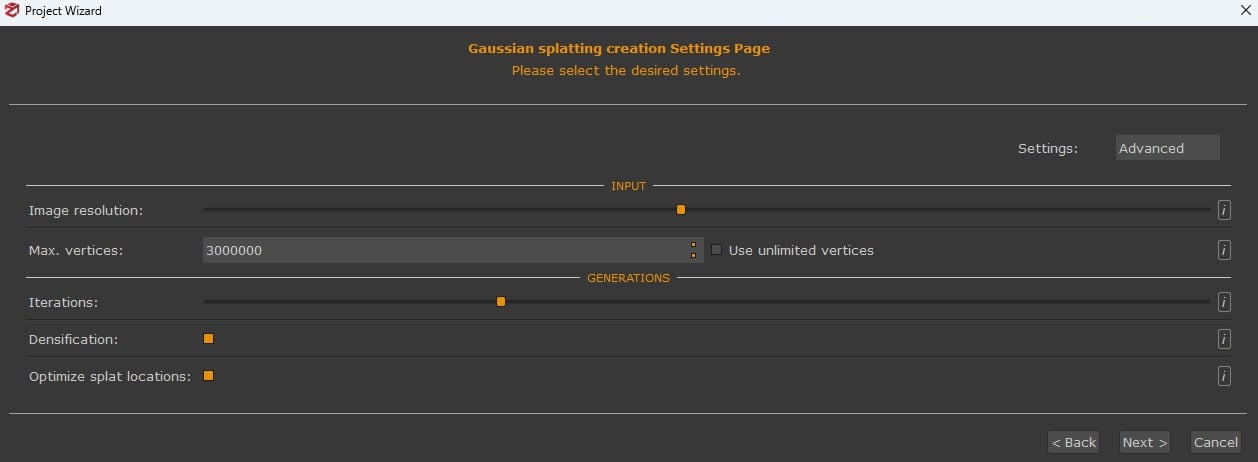
Zephyr’s documentation says splats are always generated from an existing structured point cloud in the workspace: the SfM sparse cloud, a dense cloud from Zephyr’s multi-view stereo, an external cloud such as a structured laserscan, or, for best results, a dense cloud refined by photoconsistency meshing. The result is a view-synthesis visualization, not a new geometric deliverable such as a mesh. Generation can be queued in the Project Wizard or started from Workflow > Advanced > Dense Point Cloud Generation. It runs on a single GPU only; CUDA cards perform best, OpenCL is slower, and CPU processing is strongly discouraged. Version 9.0 can also export Gaussian Splatting objects, and workspace merges now include them.